
The Future of KDS: AI, Automation, and Analytics
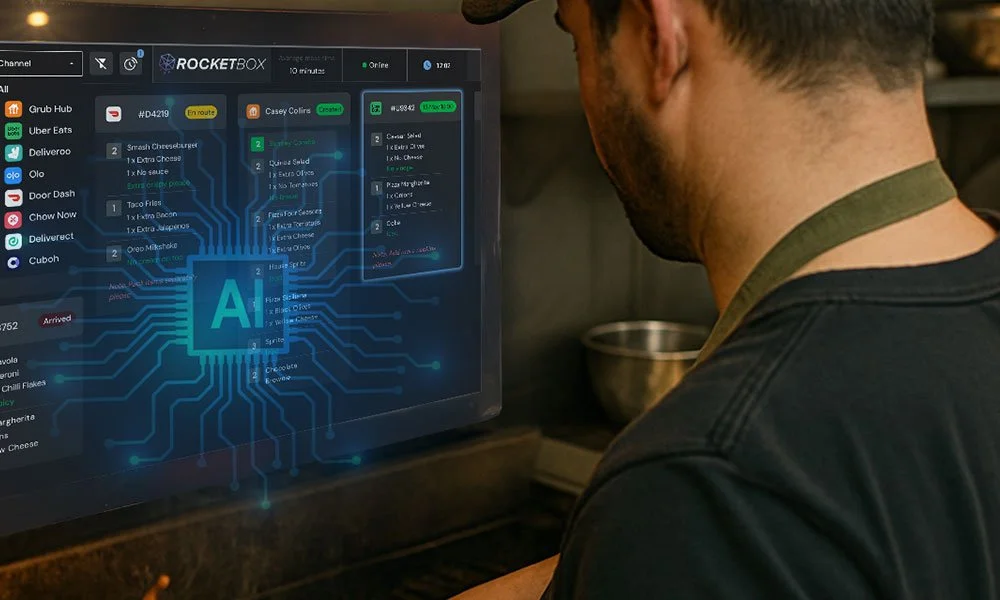
If you’ve ever stood in a busy kitchen on a Friday night, you already know the problem.
Orders are flying in from multiple channels. Drivers are arriving earlier than expected. A table of six is waiting on mains. Someone shouts that an order was missed. Another gets remade because it went out cold. And in the middle of it all, your team is trying to stay calm, focused, and fast.
This is exactly where the future of kitchen display systems becomes critical.
Because what used to be a simple “screen instead of paper” is now turning into something much bigger. The modern kitchen is no longer just cooking food. It’s managing logistics, timing, channels, and expectations all at once. And traditional systems are struggling to keep up.
In this article, we’ll break down where kitchen display systems are heading, why AI, automation, and analytics are becoming essential, and what this means for restaurants that want to stay competitive in a delivery-first world.
The Future of Kitchen Display Systems Starts with a New Reality
Kitchens Are No Longer Linear
For decades, kitchens operated in a fairly predictable way. Orders came in. They were cooked in sequence. They were served or handed over. Simple.
That model no longer exists.
Today’s delivery restaurant is dealing with multiple streams of demand at once. Orders come from Deliveroo, Uber Eats, Just Eat, direct ordering systems, and dine-in. Each one has different timing expectations. Each one has different consequences if things go wrong.
The old FIFO approach, where orders are prepared in the order they arrive, breaks down quickly under this pressure. A delivery order placed later might need to be prioritised because a driver is five minutes away. A dine-in table might need to jump the queue because they’ve already been waiting too long.
The reality is this. Kitchens are now dynamic systems, not static ones.
And that shift is exactly what is driving the future of kitchen display systems.
The Rise of the Invisible Scorecard
Most operators don’t realise how much they’re being evaluated in real time.
Delivery platforms are constantly measuring performance. Prep time accuracy, order readiness, cancellations, and customer ratings all feed into algorithms that decide how many orders you receive. Restaurants with higher reliability and faster execution get pushed up. Others quietly drop down.
This creates a hidden pressure inside the kitchen.
Every delay, every mistake, every poorly timed order has a knock-on effect that goes beyond that single transaction. It affects your visibility, your revenue, and your long-term growth.
This is why execution is becoming more important than ever.
And it’s why the future of kitchen display systems is moving beyond display and into decision-making.
What Traditional KDS Gets Right and Where It Falls Short
The First Evolution: From Paper to Screens
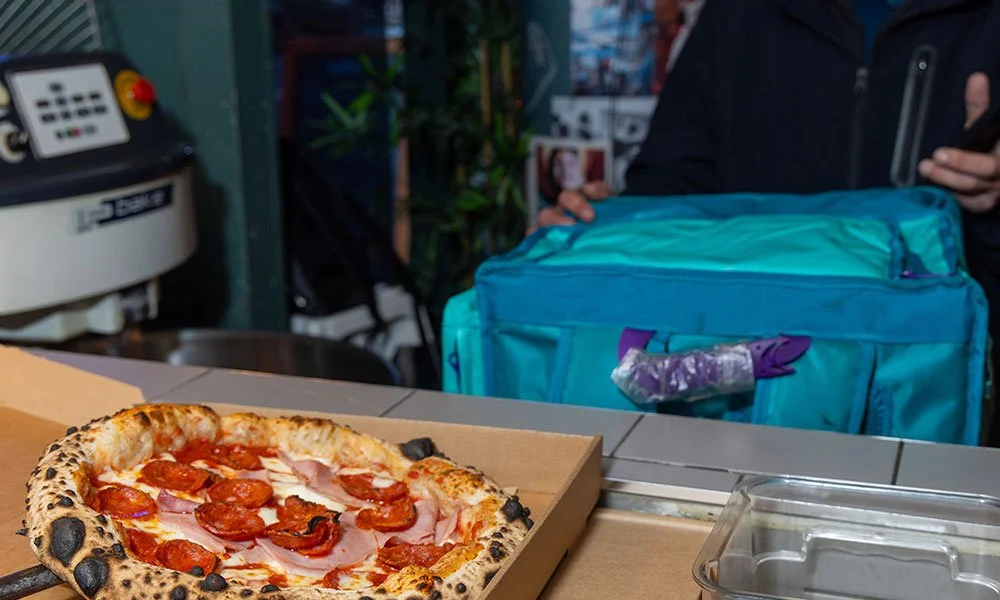
The first generation of kitchen display systems solved a real problem. They replaced printed tickets with digital screens. This reduced clutter, improved readability, and helped teams stay more organised during service.
For many restaurants, this was a big step forward.
Orders were easier to track. Updates were faster. Communication improved. It was a clear upgrade from paper-based workflows.
But the reality is that most systems stopped evolving at that point.
The Limitation: Visibility Without Intelligence
Traditional KDS platforms are very good at showing information. They display orders, group items, and allow teams to mark things as complete.
What they don’t do is think.
They don’t understand that a driver is arriving early. They don’t adjust priorities based on real-world conditions. They don’t account for kitchen load, prep times, or bottlenecks.
They rely on humans to make those decisions.
And in a high-pressure environment, that’s where things start to break down.
Because when your team is busy, stressed, and dealing with multiple demands at once, decision-making becomes inconsistent. Orders get delayed. Timing slips. Mistakes happen.
This is the gap that the next generation of systems is designed to solve.
AI Is Transforming How Kitchens Make Decisions
From Static Queues to Dynamic Prioritisation
At the core of the future of kitchen display systems is one key shift. Moving from static order queues to dynamic prioritisation.
Instead of treating every order the same, AI-driven systems analyse multiple variables in real time. They look at driver arrival times, prep durations, order size, and kitchen capacity. Then they continuously adjust the order in which items should be prepared.
This changes everything.
A large delivery order might move up the queue if a driver is nearby. A smaller order might be delayed slightly to prevent congestion at a station. A high-value dine-in table might be prioritised to improve the guest experience.
These are decisions that experienced kitchen managers make instinctively.
AI simply makes them consistently and at scale.
Reducing Cognitive Load on Staff
One of the biggest hidden problems in modern kitchens is decision fatigue.
Your team is not just cooking. They are constantly making micro-decisions. What should be started next? Which order is most urgent? Should this be bumped or held? Is that driver waiting too long?
Over time, this creates stress and inconsistency.
AI removes that burden.
By guiding prioritisation and sequencing, it allows staff to focus on execution rather than constantly recalculating what to do next. This leads to faster service, fewer mistakes, and a more controlled environment during peak hours.
Automation Is Reshaping Kitchen Workflows
The End of Manual Coordination
In many kitchens today, coordination still happens through shouting, guesswork, or informal communication.
Someone calls out that a driver has arrived. Another checks a tablet. A third tries to speed up an order that’s running late.
It works, but it’s inefficient.
Automation changes this by connecting systems together.
Driver tracking, order ingestion, and kitchen workflows become synchronised. The system knows when a driver is approaching. It adjusts prep timing automatically. It ensures that food is ready at the right moment, not too early and not too late.
This level of coordination is almost impossible to achieve manually at scale.
Multi-Station Routing Becomes Standard
As kitchens grow more complex, so does the need for better routing.
Different stations handle different items. Grill, fryer, pizza, prep. In a busy environment, ensuring that each station receives the right items at the right time is critical.
Automation allows orders to be intelligently split and routed across stations.
Instead of sending an entire order to one screen, items are distributed based on where they need to be prepared. This reduces congestion, improves flow, and ensures that everything comes together at the right time.
It’s a simple concept, but when done correctly, it has a huge impact on efficiency.
Analytics Is Turning Kitchens into Data-Driven Operations
From Guesswork to Measurable Performance
For years, kitchen performance has been difficult to measure accurately.
Operators rely on instinct, experience, and occasional reports. But real-time visibility into what’s actually happening during service is often limited.
Modern systems are changing that.
They provide detailed insights into prep times, station performance, bottlenecks, and order flow. This allows operators to identify issues, test improvements, and track results over time.
Instead of asking “Why was service slow last night?”, you can see exactly where delays occurred and why.
Continuous Optimisation Becomes Possible
Once you have data, you can improve.
You can adjust staffing based on peak patterns. You can refine menus to reduce bottlenecks. You can optimise station layouts. You can even predict when issues are likely to occur before they happen.
This is where the future of kitchen display systems moves beyond operations and into strategy.
The kitchen becomes a system that can be continuously refined and improved, rather than something that simply reacts to demand.
Real-World Challenges That Are Driving This Evolution
Delivery Complexity Is Increasing
One of the biggest drivers behind this shift is the complexity of delivery operations.
Platforms are introducing features like order stacking and batching. Drivers may carry multiple orders at once. Arrival times become less predictable. Kitchens need to adapt quickly to avoid delays.
This creates a moving target.
Without intelligent systems, it becomes very difficult to keep everything aligned.
Labour Constraints Are Not Going Away
The restaurant industry continues to face staffing challenges.
Hiring and retaining experienced staff is difficult. Training new team members takes time. And during peak hours, even strong teams can become overwhelmed.
Technology needs to compensate for this.
By simplifying workflows and reducing decision-making pressure, advanced systems allow kitchens to operate more efficiently with the team they have.
Customer Expectations Are Higher Than Ever
Customers now expect speed, accuracy, and consistency.
They are comparing your delivery time to competitors. They are leaving reviews. They are expecting hot food, delivered on time, every time.
Failing to meet those expectations has immediate consequences.
This raises the stakes for kitchen operations.
The Future of Kitchen Display Systems: What It Actually Looks Like
Fully Integrated, Real-Time Systems
The future of kitchen display systems is not a standalone screen.
It is a fully integrated system that connects orders, drivers, kitchen stations, and analytics into one continuous flow of information.
Everything is updated in real time. Decisions are made dynamically. The system adapts as conditions change.
This creates a level of control that simply wasn’t possible before.
AI-Driven Execution, Not Just Visibility
The biggest shift is from visibility to execution.
Instead of showing you what’s happening, the system actively helps you run the kitchen.
It prioritises orders. It routes items. It synchronises with drivers. It highlights issues before they escalate.
This turns the KDS into a true kitchen management system.
Predictive and Proactive Operations
Looking ahead, systems will become even more predictive.
They will anticipate demand spikes. They will adjust workflows in advance. They will recommend staffing changes and operational improvements.
The goal is not just to react to problems, but to prevent them.
Where RocketBox Fits Into This Future
As kitchens evolve, the tools they use need to evolve with them.
This is where platforms like RocketBox come in.
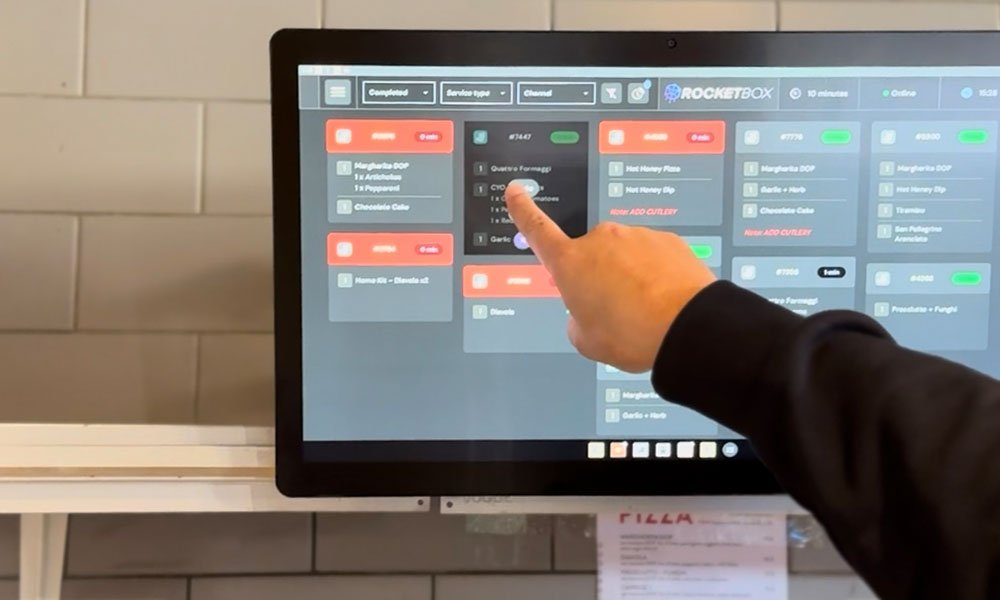
Rather than acting as a traditional display system, RocketBox is designed as a control layer for the kitchen. It focuses on real-time orchestration rather than static visibility.
Its approach reflects the direction the industry is heading.
AI-powered order prioritisation ensures that the most critical orders are always handled at the right time. Driver and kitchen synchronisation reduces wait times and improves delivery performance. Multi-station routing allows kitchens to scale without losing control. Real-time optimisation keeps everything aligned, even during peak pressure.
This is not about adding complexity.
It’s about removing chaos.
By aligning the kitchen with the realities of modern delivery operations, systems like RocketBox allow restaurants to operate more efficiently, reduce errors, and ultimately increase revenue.
The Financial Impact of Smarter Kitchen Systems
Efficiency Directly Drives Revenue
When kitchens run more efficiently, the impact is immediate.
Orders go out faster. More orders can be processed during peak hours. Delays and cancellations are reduced. Customer satisfaction improves.
All of this translates into higher revenue.
Even small improvements in timing and accuracy can have a significant effect over time.
Reducing Hidden Costs
Inefficiency has a cost.
Remakes, refunds, wasted food, and lost orders all eat into margins. These issues are often accepted as part of doing business, but they are not inevitable.
Smarter systems reduce these losses.
By improving timing and coordination, they minimise mistakes and ensure that orders are executed correctly the first time.
Long-Term Competitive Advantage
As delivery platforms continue to evolve, operational excellence will become a key differentiator.
Restaurants that can consistently deliver fast, accurate orders will outperform those that cannot.
The future of kitchen display systems is not just about improving operations.
It’s about staying competitive in a rapidly changing market.
Conclusion: Why the Future of Kitchen Display Systems Matters Now
The future of kitchen display systems is already taking shape.
AI, automation, and analytics are transforming kitchens from reactive environments into controlled, data-driven systems. What used to be a simple display tool is becoming the central nervous system of the operation.
For restaurant operators, this is not a distant trend.
It is a current reality.
The pressure from delivery platforms, rising customer expectations, and increasing operational complexity means that relying on outdated systems is no longer sustainable.
Adopting more advanced solutions is not just about efficiency. It is about survival and growth.
The restaurants that embrace this shift will be the ones that thrive.
And those that do not will find it increasingly difficult to keep up.
FAQ
What does the future look like for kitchen display systems?
The future of kitchen display systems involves AI-driven prioritisation, automation of workflows, and real-time analytics to improve speed, accuracy, and efficiency in restaurant kitchens.
How does AI improve a KDS?
AI improves a KDS by dynamically prioritising orders based on factors like driver arrival times, prep duration, and kitchen load, reducing delays and improving consistency.
Why are traditional KDS systems no longer enough?
Traditional systems focus on displaying orders but lack intelligence. They do not adapt to real-time changes, making them less effective in complex, delivery-heavy environments.
What is a kitchen management system?
A kitchen management system goes beyond display by actively coordinating workflows, routing orders, and optimising operations in real time.
How can a modern KDS increase restaurant revenue?
By improving efficiency, reducing errors, and increasing throughput during peak hours, a modern KDS helps restaurants process more orders and improve customer satisfaction.
