
The Evolution of the Food Delivery Space and What It Means for Restaurants
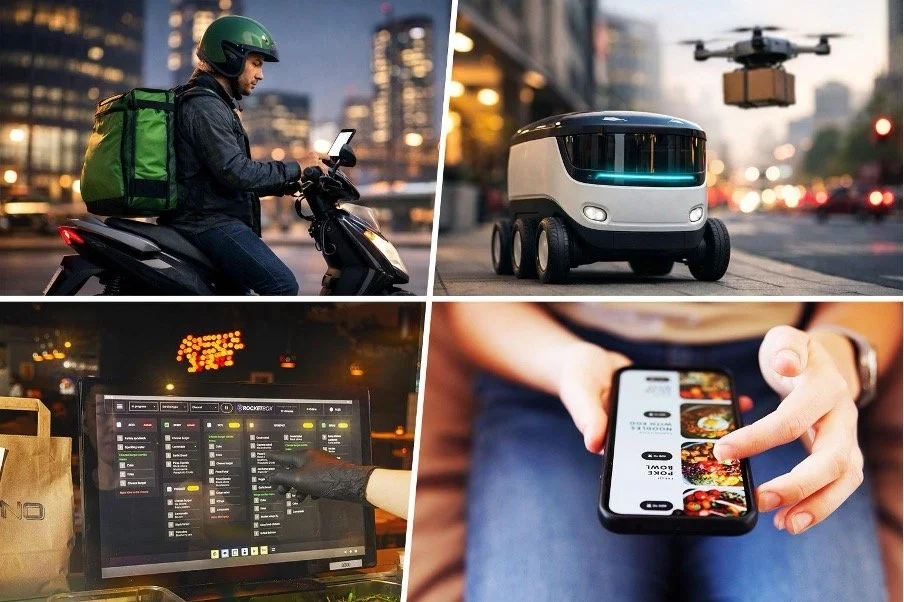
If you run a busy takeout or delivery operation, you can feel it shifting under your feet. What used to be “a few apps that send drivers” is turning into something much bigger: an operating system for local commerce.
And here’s the punchline.
In the food delivery space, the winners are not always the restaurants with the best food. They’re the restaurants that can execute the best. Consistently. Across multiple channels. Under pressure. With fewer mistakes. With tighter timing. While platforms keep changing the rules.
That might sound unfair. It is. But it’s also an opportunity.
Because once you understand how marketplaces are evolving, you can build a kitchen that wins alongside them.
This article breaks down:
Where marketplaces are heading (and why)
The new “invisible scorecard” platforms care about (and how it affects your orders)
Why stacking and batching makes FIFO fall apart
Why refunds are becoming faster and more frequent
What “next-gen” operations look like with a Kitchen Display System (KDS) and a proper Kitchen Management System
How RocketBox fits into the new reality
Food delivery marketplaces are becoming the operating system for local commerce
Marketplaces started with one promise: “We’ll bring food to your door.”
Now it’s: “We’ll bring anything to your door.”
The biggest platforms are expanding beyond meals into grocery, retail, pharmacy, and more. Their goal is simple: be the default place customers go when they want something delivered quickly.
You can see this “beyond meals” expansion in product launches, partnerships, and acquisition moves across the market. You can also see it in how platforms talk about themselves: not as food apps, but as commerce infrastructure.
That changes the competitive map for you.
You’re not just competing with the restaurant across the road anymore.
You’re competing with the burger place that paid for an ad slot, the grocery store with ready-to-eat meals, the convenience shop offering “dinner in 10 minutes”, every other operator inside the same scrolling feed. And the customer can switch in one tap.
So what do platforms do when choice explodes?
They rank. They filter. They optimise.
Which brings us to the part most restaurants underestimate.
Food Delivery Marketplaces are becoming algorithmic, and operations are the input
Marketplaces are increasingly run by algorithms because platforms have to decide:
Who gets shown first
Who gets the “best” customers
Who is eligible for certain delivery promises
Who can be batched/stacked efficiently
Who creates fewer problems (refunds, remakes, support tickets)
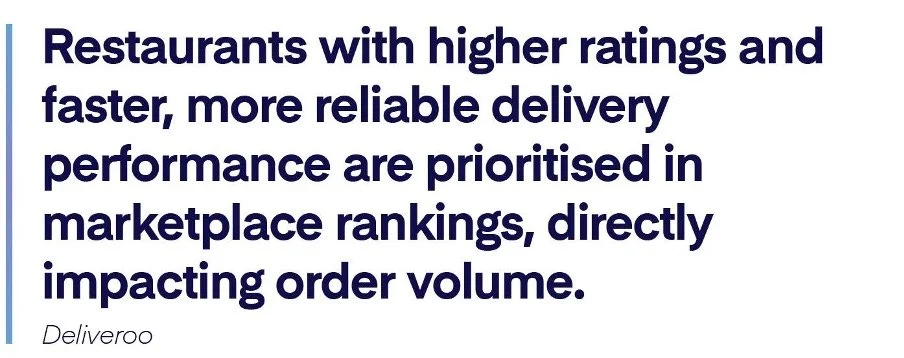
Deliveroo spells this out clearly for partners: “Ratings can have an impact on your position in the app.”
That one line should change how you think about operations.
Because visibility is not just marketing. It’s performance.
And performance is built (or broken) in the kitchen.
What’s driving the evolution of marketplaces
Let’s break the evolution into four big forces you can actually plan around:
Platforms are expanding selection (beyond meals)
Advertising is becoming pay-to-play discovery
Logistics efficiency is pushing stacking and batching harder
Ranking and refunds are getting more automated
Each one raises the operational bar for restaurants.
1) Expansion beyond meals means your “category” is getting crowded
When food delivery marketplaces become the operating system for local commerce, restaurants sit next to grocery, retail, and ready meals.
That makes your product look more like a commodity. Not because your food is generic, but because the interface is. A customer sees photo, price ,delivery time, rating, promo, sponsored label (ads). So your differentiation gets compressed into measurable signals. And those signals are influenced heavily by operational execution.
2) Ads are now a core growth engine for marketplaces
As discovery moves inside apps, advertising becomes a major profit engine. Deliveroo even nudges partners directly: you can use ads to “make your restaurant more visible in the app,” shown across home feed, categories, and search.
DoorDash has been explicit about how meaningful ads have become: in 2024, DoorDash and Wolt Ads crossed an annualised advertising revenue run rate of over $1 billion.
Here’s why you should care:
Ads don’t fix bad operations.
They scale whatever your operation already is.
If you’re late, inconsistent, or error-prone, ads can increase volume… and amplify the chaos with more tickets, more refunds, more labour spikes, more 1-star reviews and more algorithmic penalties.
Ads are a lever. Operations are the foundation.
3) Stacking and batching is the new logistics battleground
Food delivery marketplaces are obsessed with efficiency. Rider utilisation matters. Driver idle time kills unit economics.
So platforms push stacking and batching harder.
Deliveroo explains stacked orders simply: two different customers close to each other, same restaurant, similar time, both offered to one rider.
They also rolled out “Multi-Site Stacking,” where a rider can collect two orders from different restaurants and/or grocery partners.
For platforms, it’s great:
Fewer riders for the same demand
Better density
Lower cost per drop
Faster coverage
For restaurants, it changes everything.
Because FIFO breaks.
If you run “first in, first out” in a stacked world, you get:
Order A ready too early, sits and dies
Order B not ready when rider arrives
Rider waits (platform hates that)
ETA slips
Customer gets cold food
Refund risk rises
Rating takes a hit
A rating hit is not just ego. It’s future revenue.
4) Refunds and complaints are becoming easier and faster
Food delivery marketplaces have trained consumers to expect frictionless resolution.
A few taps. A complaint. A refund or credit. Done.
Just Eat lists common refund claim reasons like cold food, missing items, and incorrect orders in its partner guidance.
Deliveroo also has a partner-facing explanation of refund charging and explicitly includes issues like late deliveries due to rider delays and cold food in the types of claims it may cover (or allocate responsibility for).
The big point for operators:
Even when it’s not “your fault,” it still becomes “your problem”:
You still remake
You still pay labour
You still lose the customer
You still take the rating hit
Marketplaces are moving toward “instant outcomes.” So restaurants need “instant control” in the kitchen.
The new competition model: you’re scored every day
Restaurants often think competition is menu, branding, price, location.
When you’re listed on marketplaces, it’s also consistency, timing, accuracy, reliability under load.
Deliveroo’s Partner Ranking Policy is explicit that partners may be ranked based on reviews, popularity (orders), and commercial agreements.
Translation: your operational performance influences your discovery.
So the question becomes:
What operational signals actually move the needle?
A practical short list:
Prep time stability (not just speed)
Handoff timing (ready when rider arrives)
Low missing/incorrect item rate
Low cancellation rate
High customer rating trend
This is why “good enough” kitchen ops stops working.
And it’s why a basic Kitchen Display System is helpful, but often not sufficient anymore.
Why the kitchen is now the bottleneck
Most restaurants don’t lose because they lack demand.
They lose because the kitchen can’t produce predictable handoff timing across:
Multiple marketplaces
Multiple service types (delivery, pickup, dine-in)
Multi-station production
Stacked and batched courier flows
Peak-time surges
What do overwhelmed kitchen teams do? They pause ordering or operate in “busy mode” which means longer lead times for customers, pushing them to competitors. A 1-hour pause can easily cost a busy delivery restaurant over €1,000 in lost revenue for that hour alone.
So when the kitchen is “out of sync,” everyone suffers:
The customer gets cold food
The courier waits and delivers late orders
Your restaurant eats refunds, remakes, and review damage.
That’s why the next wave of restaurant tech is moving from “screens” to “control towers.”
Kitchen Display System vs Kitchen Management System: what’s the difference?
A Kitchen Display System (KDS) is the starting point. Tickets appear on a screen instead of paper, orders can be routed to stations, staff bump items/orders when complete and you get basic timing and throughput data.
That’s valuable. It reduces missed tickets and improves communication.
A Kitchen Display System basically digitises paper tickets and removes the need for multiple devices to receive orders. But here’s the limit:
Most traditional KDS tools are designed for in-kitchen visibility.
The current food delivery space now demands kitchen-to-courier synchronisation.
That’s where a Kitchen Management System shows up.
A Kitchen Management System treats the kitchen like an operations engine:
It prioritises and sequences work based on real-world constraints (not just order time)
It groups orders that must leave together (stacking)
It syncs prep timing with courier ETAs
It manages station load and routing rules
It tracks performance in a way that maps to platform outcomes (ratings, refunds, reliability)
That difference is the gap between “busy” and “controlled.”
Why FIFO fails when stacking becomes normal
Let’s make this real.
You’re on a Friday night. Orders are flying in from three marketplaces plus your own pickup. A driver arrives for two stacked deliveries.
If you run FIFO, the first order gets cooked first, the second order might be 8-12 minutes behind. The first order sits under heat lamps, food quality drops. Meanwhile the drivers get frustrated and the customers get disappointed.
That one bad handoff can cost you:
A refund
A 1-star rating
Lower app visibility
Less future demand
Customer moves to competitor next time
The fix is not “work faster.” The fix is “sequence smarter.”
You need systems that understand which orders are linked, which stations are bottlenecked, when the driver is actually arriving and which items can start later without missing SLA.
This is exactly where an AI-driven Kitchen Management System like RocketBox earns its keep.
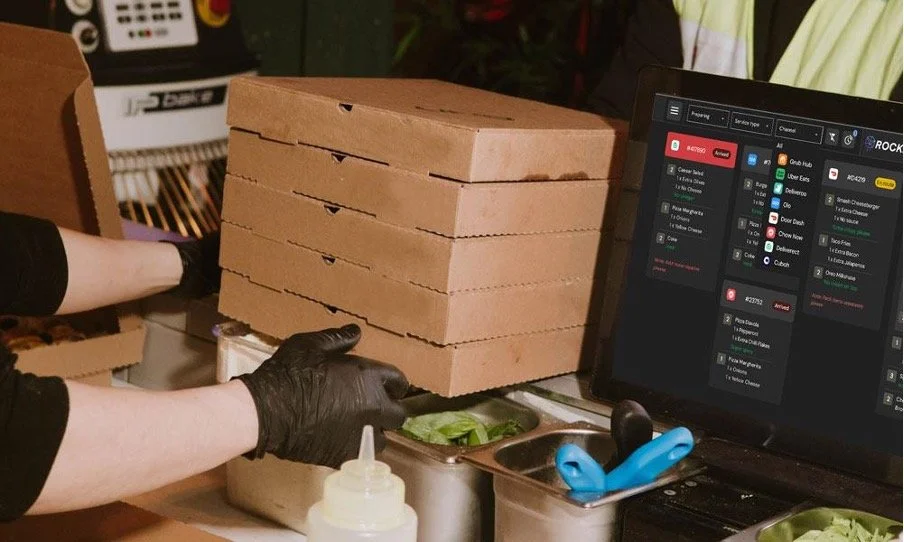
Enter RocketBox: built for the modern Food Delivery Space
RocketBox is an AI-powered Kitchen Management System for delivery-first restaurants. It’s designed for the reality the food delivery space is forcing onto operators: multi-channel volume, stacked deliveries, algorithmic ranking, and refund sensitivity.
RocketBox goes beyond a standard Kitchen Display System by focusing on three outcomes that matter:
1) Perfect handoff timing (kitchen and courier sync)
RocketBox is built to help you hit “ready when the courier arrives” more consistently. That means fewer:
Late pickups
Cold food complaints
Driver wait penalties
And when platforms are ranking and optimising around reliability, that matters.
2) Smarter order prioritisation and stacking-aware prep
When stacked orders happen, RocketBox groups them so they come out together, not sequentially. That protects quality and reduces courier idle time.
This is the operational response to how Deliveroo and others use stacked and multi-site stacking to improve efficiency.
3) Advanced kitchen station routing and workload balancing
Most KDS setups can route tickets to screens. RocketBox is designed to handle more complex “stationising”:
Multi-station kitchens
High-volume delivery workflows
Rules-based routing (by product/service type)
Faster visibility into bottlenecks
So instead of “everyone is slammed,” you get clarity about which station is backing up, what’s at risk of going late and what to prep next to protect handoff timing.
This is how you optimise kitchen operations in a way that affects real marketplace outcomes. RocketBox increases throughput at peak times by over 30%, that’s a huge revenue increase for restaurants without adding extra labour!
Why RocketBox works for both restaurants and marketplaces
Here’s the part most operators miss:
Your restaurant kitchen performance directly affects delivery marketplace economics.
Marketplaces win when restaurants are predictable:
Less courier idle time (better batching outcomes)
Fewer refunds and support tickets
More efficient restaurant operators
Higher customer repeat rates
Therefore, the marketplaces will prioritise their most efficient restaurant operators.
RocketBox improves “kitchen-side signals” that the entire machine depends on and is proven to increase ratings on the marketplaces so your restaurant will rank higher on the platforms, without paying for prime positioning!
That’s why it’s not just another restaurant tool. It’s operational infrastructure.
The next wave: robotics, drones, and automation will punish sloppy kitchens
This is not sci-fi anymore.
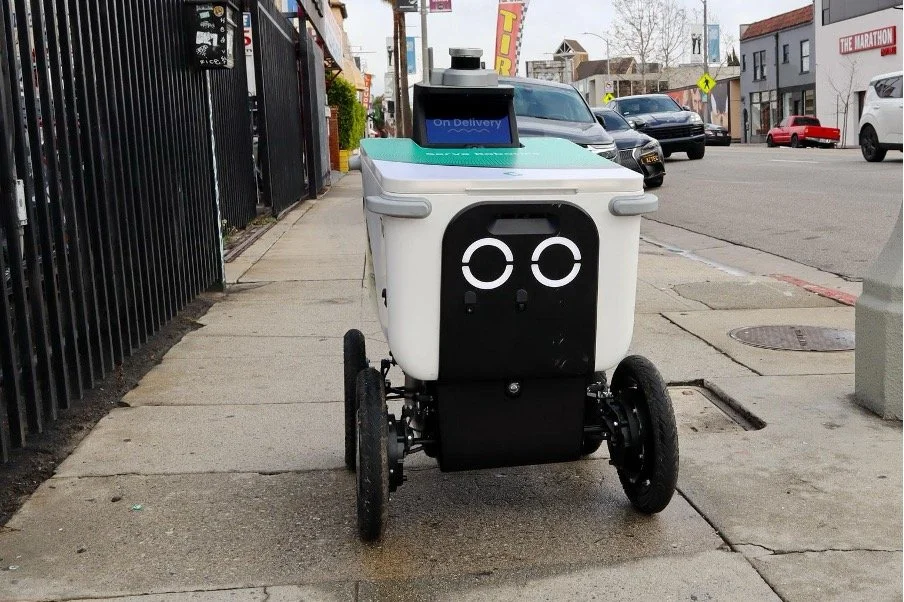
DoorDash and Wing have expanded drone delivery partnerships and pilots in the US. Uber Eats and Starship announced autonomous robot deliveries launching in the UK with expansion planned. Serve Robotics has been scaling sidewalk robot delivery with Uber Eats and is manufacturing toward larger fleet deployments.
Autonomous couriers are less forgiving than humans. They don’t “wait a few extra minutes” politely.
They need:
Clean readiness signals
Standardised status updates
Reliable handoff timing
Clear exception handling (“missing item”, “not ready”, “handoff delayed”)
This is another reason restaurants require stronger kitchen systems with clearer handoff timing. RocketBox is ideal for restaurants using autonomous delivery systems.
Conclusion: the food delivery marketplaces are evolving, and kitchens have to evolve with them
Marketplaces are not slowing down. It’s expanding beyond meals, pushing ads deeper into discovery, tightening logistics through stacking and batching, and making ranking and refunds more automated.
And that means this is the new reality:
Your kitchen is no longer just “the back of house.” It’s the performance engine that decides your visibility, your ratings, and your margins.
If your kitchen can consistently deliver hot, accurate, on-time orders, you don’t just survive. You win.
That’s why RocketBox exists.
RocketBox is the kitchen-side control tower designed for modern restaurant food delivery: stacked orders, multi-channel demand, algorithmic ranking, and high refund sensitivity. It helps you optimise kitchen operations with smarter prioritisation, station routing, and courier timing sync so you protect quality, ratings, and revenue.
