
6 Benefits of a Kitchen Display System for Restaurants
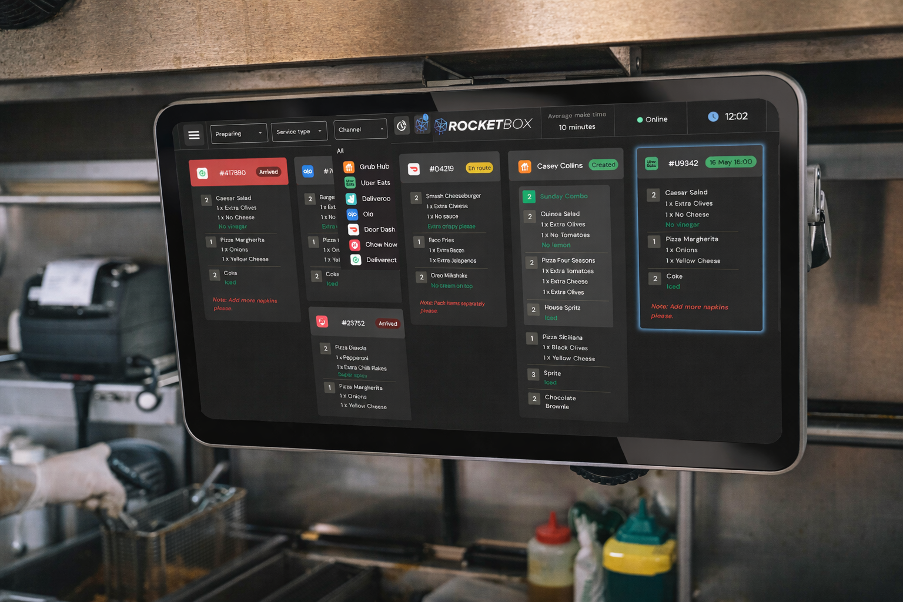
The moment everything breaks
It’s Friday night. Orders are flying in from Deliveroo, Uber Eats, your own website, and walk-ins. The kitchen printer won’t stop. Tickets pile up. A driver arrives early. Another is late. A burger sits under the heat lamp for eight minutes. Fries go cold. A remake gets called. Someone shouts “where’s table 14?”
This is where most kitchens lose money.
Not because the food is bad. Not because demand isn’t there. But because the system can’t keep up.
This is exactly where the real KDS benefits start to matter. A kitchen display system doesn’t just replace paper tickets. It changes how your kitchen thinks, moves, and performs under pressure.
And in a world where delivery now drives a huge share of restaurant revenue, that shift is no longer optional.
What is a Kitchen Display System (KDS)?
A kitchen display system is a digital screen-based system that replaces printed tickets and centralises orders from all channels into one interface.
Instead of juggling multiple tablets and printers, everything flows into a single view. Orders are displayed, prioritised, and tracked in real time. Staff interact with screens instead of paper. Managers gain visibility instead of guessing.
At a basic level, a KDS shows orders. At a higher level, it becomes a kitchen management system that controls workflow, timing, and output.
That difference is where the real value lies.
Because the goal isn’t to digitise tickets. The goal is to run a faster, more efficient kitchen.
Why kitchens are struggling more than ever
The pressure on kitchens has changed dramatically in the last five years.
According to the National Restaurant Association, off-premise dining now accounts for a significant share of restaurant traffic, with delivery and takeaway continuing to grow year-on-year. At the same time, platforms like Deliveroo and Uber Eats are optimising for speed, reliability, and customer experience.
That creates a new reality:
Orders don’t arrive evenly.
Drivers don’t arrive predictably.
Demand spikes are sharper.
Mistakes are more expensive.
A kitchen built around paper tickets simply wasn’t designed for this.
Without proper systems, you get:
Orders made too early or too late
Drivers waiting or leaving
Food sitting, going cold
Staff overwhelmed during peaks
And every one of those problems turns into lost revenue.
This is why KDS benefits are no longer about convenience. They’re about survival in a delivery-first market.
The real KDS benefits that drive revenue and efficiency
1. Faster service without adding staff
One of the biggest misconceptions is that speed comes from hiring more people.
In reality, speed comes from removing friction.
A well-implemented kitchen display system reduces the time it takes to understand, prioritise, and execute orders. Staff don’t need to scan paper tickets or shout across the kitchen. They see exactly what needs to be done, in the right order.
During peak hours, this matters most. Instead of chaos, you get flow.
At UNO Pizza in Dublin, for example, structured order flow reduced prep time significantly compared to local averages. That’s not because the team worked harder. It’s because the system removed confusion.
This is one of the most immediate and measurable KDS benefits.
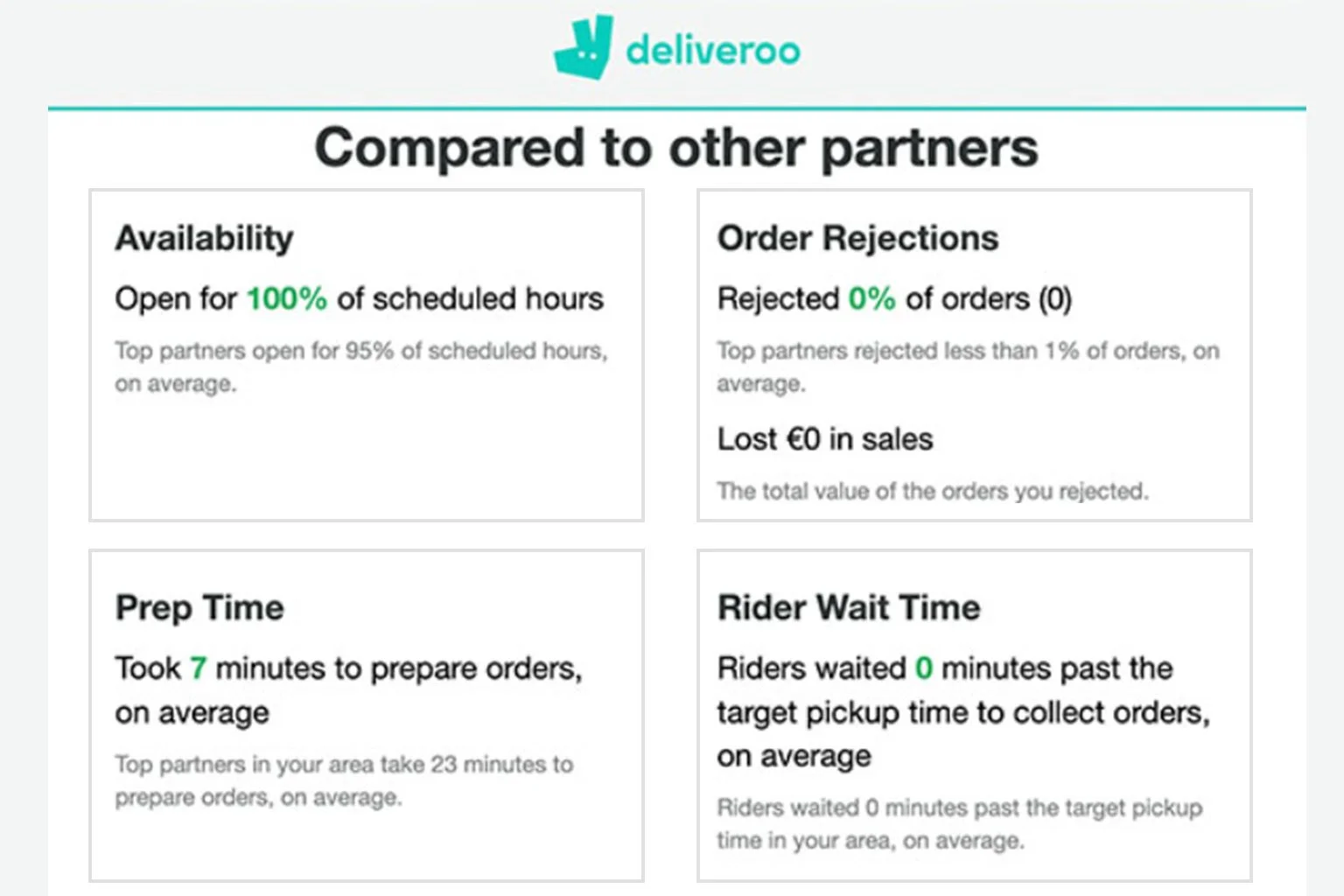
UNO Pizza stats - when using RocketBox KDS
2. Better order accuracy and fewer costly mistakes
Mistakes in delivery are expensive.
A wrong topping, a missing item, or a delayed order doesn’t just cost the food. It triggers refunds, bad reviews, and lost future orders.
Industry research consistently shows that order inaccuracies are one of the top drivers of customer dissatisfaction in delivery.
A KDS reduces this in a few key ways:
First, orders are clearly displayed and organised. No smudged ink. No missed modifiers.
Second, stations only see what they need. The grill doesn’t care about drinks. The fryer doesn’t care about desserts.
Third, progress is tracked in real time. Nothing gets lost.
Over time, this leads to fewer remakes, fewer refunds, and better ratings.
And better ratings directly impact how marketplaces rank and promote your restaurant.
3. Real-time visibility across the kitchen
Most kitchens operate with limited visibility.
Once an order is printed, there’s no clear way to track its status. Managers rely on gut feel. Staff rely on memory.
A modern kitchen management system changes that completely.
You can see:
What’s in progress
What’s delayed
What’s ready
What’s coming next
This visibility allows for better decision-making in the moment.
If a station is overloaded, you can adjust. If orders are stacking up, you can prioritise. If a delay is coming, you can act before it becomes a problem.
This is one of the most underrated KDS benefits, but it’s critical for maintaining control during peak service.
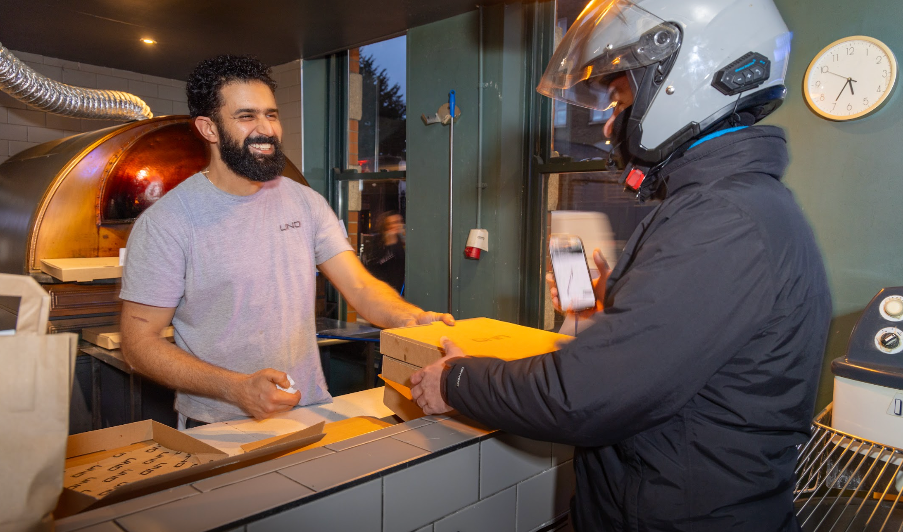
4. Improved coordination between kitchen and drivers
This is where most kitchens still struggle.
Drivers and kitchens operate on different timelines. Drivers arrive based on estimated prep times, which are often inaccurate. Kitchens cook based on order time, not arrival time.
The result is predictable:
Drivers wait
Food sits
Customers receive cold meals
A more advanced KDS starts to bridge this gap.
By aligning prep timing with expected driver arrival, kitchens can reduce wait times and improve delivery quality.
This isn’t just operational. It directly affects revenue.
Marketplaces reward efficient restaurants with better visibility and more orders. Slow or inconsistent performance does the opposite.
This is where the next evolution of KDS benefits becomes clear.
5. Higher throughput during peak hours
Peak hours are where restaurants make their money.
But they’re also where most kitchens break.
Without a system, order volume hits a ceiling. Not because demand isn’t there, but because the kitchen can’t handle more.
A KDS increases throughput by improving how orders flow through the kitchen.
Instead of batching randomly, orders are sequenced. Instead of overloading one station, work is distributed. Instead of reacting, the kitchen operates proactively.
This allows restaurants to handle more orders without increasing labour.
And that’s where real profitability comes from.
6. Reduced stress for staff
This one is often overlooked, but it matters.
A chaotic kitchen leads to mistakes, burnout, and high staff turnover.
When systems are unclear, people shout more. When tickets pile up, stress rises. When drivers are waiting, pressure builds.
A kitchen display system creates structure.
Staff know what to do. They see what’s next. They don’t have to guess.
This leads to a calmer, more controlled environment, even during busy periods.
And a calmer kitchen performs better.
FAQs
1. What are the main KDS benefits for restaurants?
The main KDS benefits include faster order processing, improved accuracy, better kitchen visibility, and higher throughput during peak hours.
2. How does a kitchen display system improve efficiency?
It centralises orders, removes manual processes, and helps staff prioritise tasks, reducing delays and confusion.
3. Is a KDS necessary for delivery-focused restaurants?
Yes. Delivery adds complexity with timing and coordination. A KDS helps manage this effectively.
4. Can a KDS reduce refunds and errors?
Yes. Clear order visibility and structured workflows reduce mistakes and improve consistency.
5. What makes modern KDS systems different?
Advanced systems use real-time data and AI to prioritise orders, sync with drivers, and optimise kitchen performance.
Where traditional KDS systems fall short
Not all KDS solutions are equal.
Many systems on the market today were designed for dine-in operations. They focus on replacing printers, not solving delivery complexity.
They show orders, but they don’t optimise them.
They display tickets, but they don’t think.
This creates a gap.
In delivery-heavy environments, you need more than visibility. You need coordination, prioritisation, and real-time decision-making.
Without that, you’re still relying on manual processes, just on a screen instead of paper.
This is where the next generation of kitchen technology is emerging.
The shift toward intelligent kitchen systems
The future of restaurant operations is not just digital. It’s intelligent.
Instead of static ticket lists, systems are starting to:
Prioritise orders dynamically
Adjust based on driver timing
Balance workload across stations
Predict delays before they happen
This is a fundamental shift.
The kitchen becomes a controlled system rather than a reactive environment.
And this is where the conversation moves beyond basic KDS benefits into something more powerful.
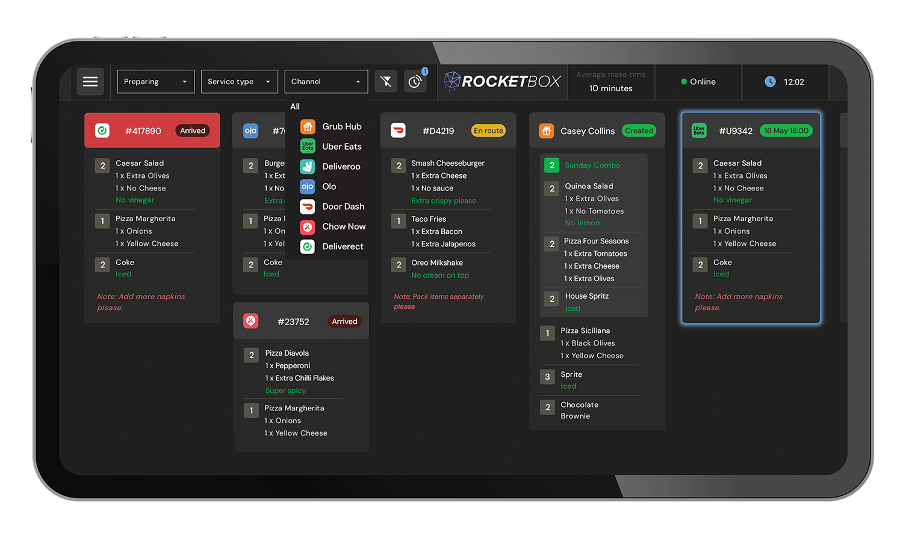
RocketBox’s AI-Powered Kitchen Display System
How RocketBox fits into this evolution
RocketBox is built around this next step.
It’s not just a kitchen display system. It’s a real-time orchestration layer for delivery kitchens.
Instead of simply showing orders, it actively manages them.
Orders are prioritised based on timing, not just sequence. Driver arrivals are factored into prep decisions. Work is routed intelligently across stations.
This creates a different kind of kitchen.
One where the system supports decision-making instead of relying on staff to manage complexity manually.
For delivery-focused restaurants, this is where the biggest gains come from.
Because the problem isn’t just visibility. It’s coordination.
And that’s what modern systems need to solve.
The financial impact of getting this right
Let’s bring this back to money.
A typical delivery-focused restaurant doing 2,000 orders per month at €30 per order generates €60,000 in monthly revenue.
Now consider the impact of operational inefficiencies:
Typically, delivery restaurants can lose 10% of orders based on kitchen inefficiencies - errors, remakes, refunds, poor experiences and lost customers, that’s €6,000 per month at risk (over €70,000 per year in lost revenue).
If peak throughput is limited by poor workflow, you may be turning away demand or slowing service, reducing total orders. A one hour pause at peak times can easily cost a delivery restaurant over €1,000 in lost revenue.
If ratings drop, marketplace visibility drops, and order volume follows.
Over a year, these effects compound.
This is why KDS benefits are not just operational. They’re financial.
Improving accuracy, speed, and coordination directly increases revenue and protects margins.
The competitive advantage of better kitchen systems
The gap between high-performing restaurants and average ones is widening.
The difference isn’t just food quality. It’s operational execution.
Restaurants that invest in better systems:
Handle more orders
Deliver faster
Maintain higher ratings
Earn more repeat business
Those that don’t:
Struggle during peaks
Rely on busy mode
Lose orders to competitors
In a marketplace-driven world, efficiency becomes a competitive advantage.
And the kitchen is where that advantage is built.
What to look for when choosing a KDS
Not all systems will deliver the same results.
When evaluating a kitchen display system, focus on:
How it handles delivery complexity
Whether it integrates with your order channels
How it supports multi-station workflows
Whether it provides real-time insights
Most importantly, look at how it performs under pressure.
Because that’s where it matters.
The future of restaurant operations
The restaurant industry is moving toward more automation, more data, and more integration.
Delivery platforms are becoming smarter. Customer expectations are rising. Competition is increasing.
Kitchens need to keep up.
The role of technology will continue to expand, from order management to predictive systems and even AI-driven optimisation.
This is not a trend. It’s a shift.
And the kitchens that adapt early will have a clear advantage.
Conclusion: Why KDS benefits matter more than ever
At its core, a kitchen display system is about control.
Control over orders.
Control over timing.
Control over performance.
In a delivery-first world, that control translates directly into revenue, efficiency, and customer satisfaction.
The most important KDS benefits are not just about replacing printers. They’re about transforming how your kitchen operates.
Faster service. Fewer mistakes. Better coordination. Higher throughput.
And ultimately, a more profitable business.
The question is no longer whether you need a KDS.
It’s whether your current system is good enough for the way restaurants operate today.
